Arabic Studies Minor
Welcome to the Arabic Studies Program
Welcome to Arabic Studies at UNC Charlotte. Learning the Arabic language is a smart move because Arabic is considered a critical language since it is the 5th most commonly spoken native language in the world. Learning Arabic will allow you to develop skills for living, working, and interacting with people in a multitude of countries and to focus on specific details related to your career choices. Because Arabic is an official language used in the United Nations, the Arab League, the Organization of Islamic Conference and the African Union among other world organizations, the need for speakers of Arabic in the U.S. government is important. There are opportunities in the 21st century to open the global economy to the Arab world, and enhance the potential for business development in Arab-speaking regions.
Arabic Studies at UNC Charlotte also offers you cultural literacy. For centuries, the Arab culture has given the world exceptional music, mathematics, art, literature, cuisine, and a unique way of life. By learning about the Arabic world, you will explore distinct cultural products and practices and values crucially important to Arabic people. By studying Arabic, you will also explore many Islamic beliefs and traditions that will allow you to understand this multifaceted culture and people.
Distinguish your professional abilities by learning a language and gain cultural literacy that can be crucial to the economic, political, and military demands in the 21st Century.
Come Explore the Arabic Studies Program:
The Arabic Studies Program offers you the following opportunities:

The Minor in Arabic Studies is an excellent addition to your degree and resume. The minor in Arabic Studies allows students the opportunity to learn Arabic through different language courses and acquire a basic level of cultural competency by taking courses taught in English and offered across a range of disciplines, including but not limited to Religious Studies, Political Science, History, International Studies, and Languages and Culture Studies. In addition to fostering language skills, the broad base of knowledge about the Arab world and culture topics that students acquire in this minor positions them to work for U.S. federal and non-federal agencies. Career possibilities include:
- Banking and Finance
- Translation & Interpretation
- Foreign Service
- Consulting
- Education
- Intelligence
- Business
- Journalism
The Minor in Arabic Studies requires a total of 20 credit hours of coursework. 14 credit hours come from four Language Core Courses with their corresponding labs, two Advanced Language Courses and another 6 credit hours come from Elective Topics Courses in Arabic Language, Literature, and Culture.
For more information see the description of the Minor in Arabic Studies or contact your advisor, Professor Noha Ghali.
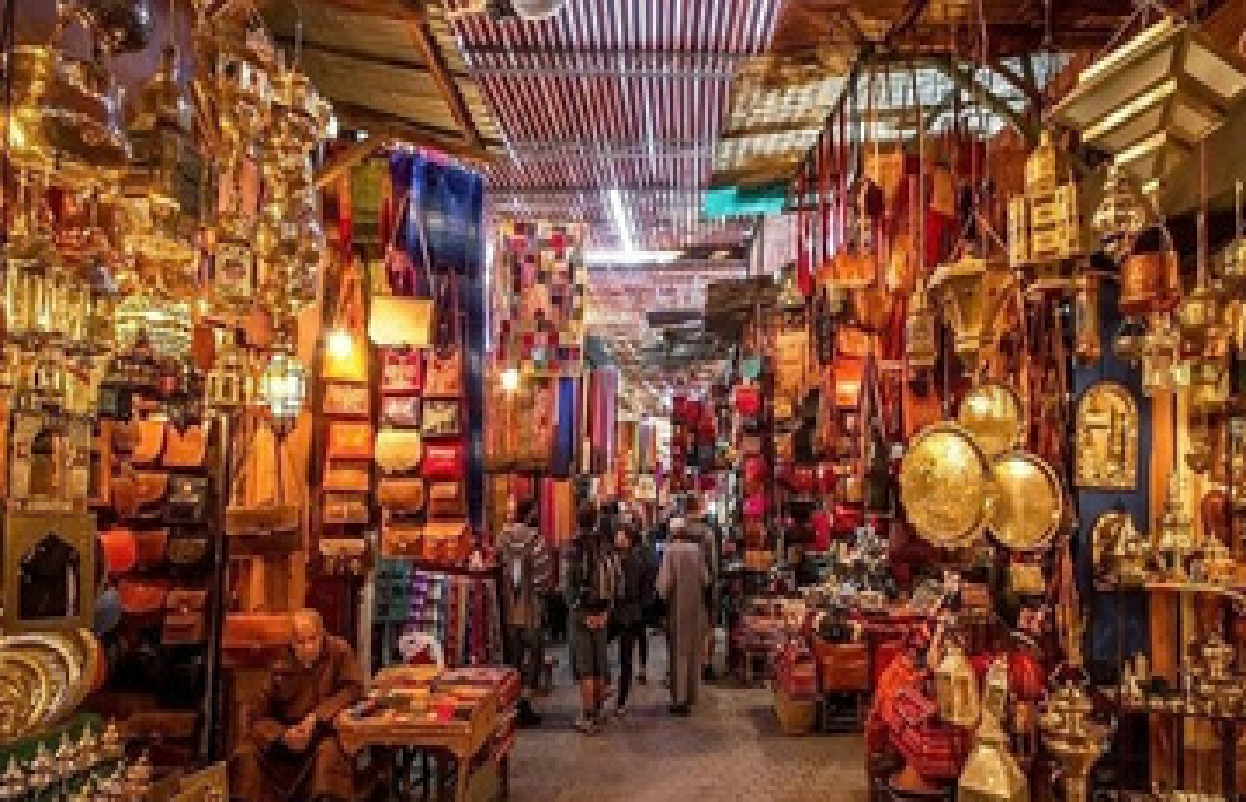
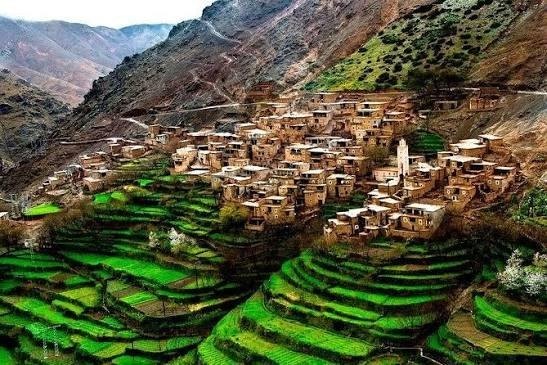
The faculty-led summer study abroad program in Morocco awards six undergraduate credit hours across two courses, which may be applied toward elective requirements or the minor in Arabic Studies. The program features an itinerary across three primary urban centers—Rabat, Casablanca, and Marrakech—combining institutional visits with cultural immersion. Students engage directly with local non-governmental organizations, historic sites via guided lectures, public and private universities, and the Moroccan Parliament. The curriculum also includes a field excursion to the Atlas Mountains, offering insight into indigenous Amazigh heritage and contemporary community structures in North Africa’s largest minority population. For more information on the faculty-led summer study abroad program to Morocco visit the summer program homepage.
Funding your study abroad experience is easier than you think. Financial aid can often be applied directly to the cost of a faculty-led program. In addition to the education abroad scholarships available to UNC Charlotte students, external scholarships from national foundations, diversity initiatives, and study abroad organizations offer dedicated funding to help cover program fees, airfare, and daily expenses, drastically reducing your out-of-pocket costs and making global learning fully accessible.
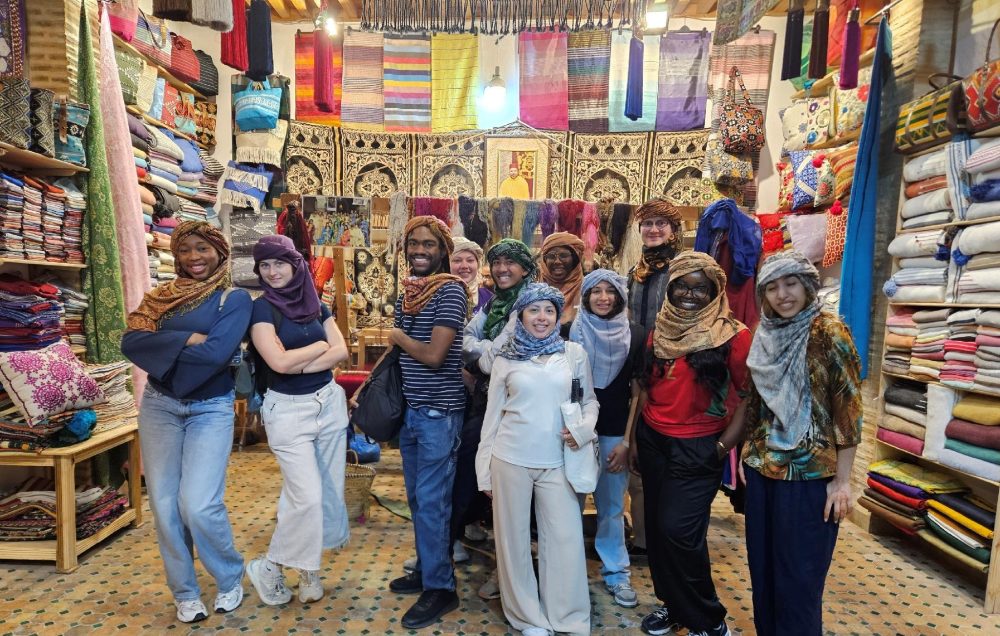
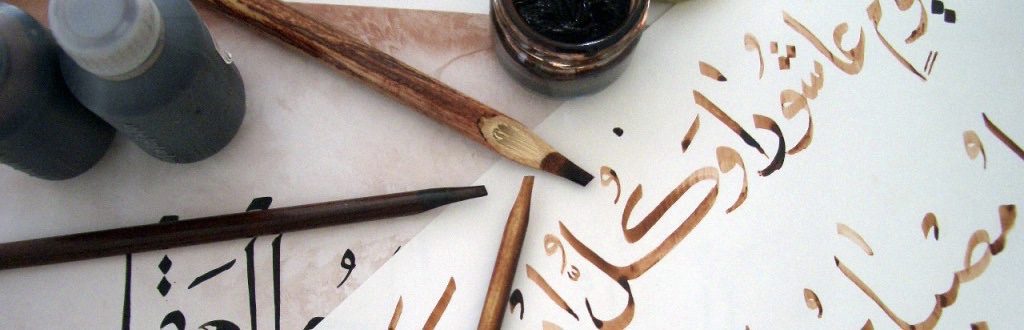
The Arabic program works to provide support for cultural events that create a rich and inclusive learning environment. Cultural events foster a welcoming campus atmosphere that encourages learning about the history and culture of arab speaking countries.
Arabic Calligraphy Workshop
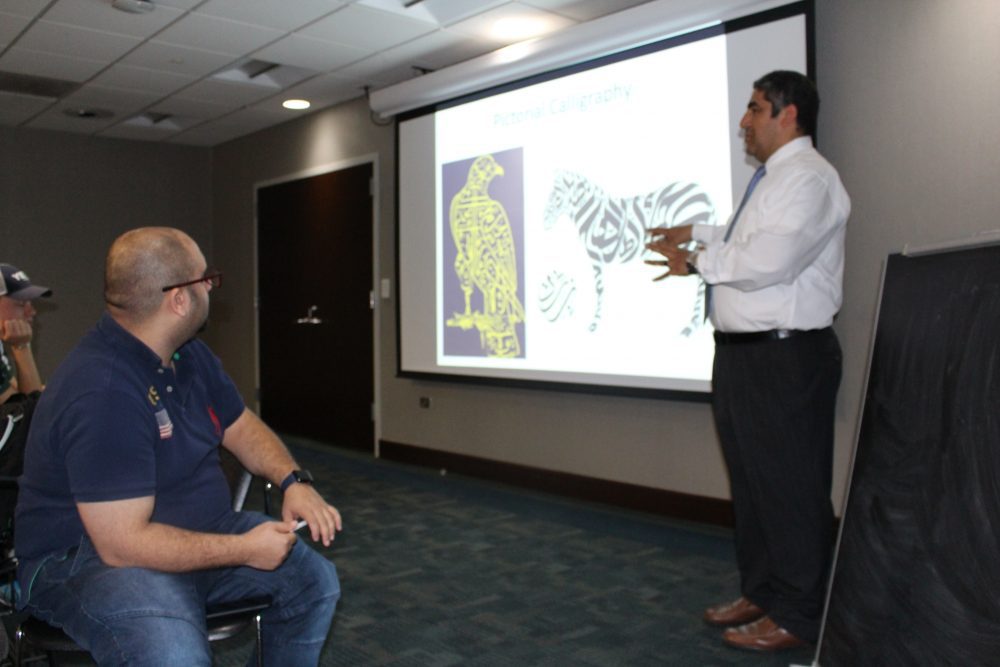
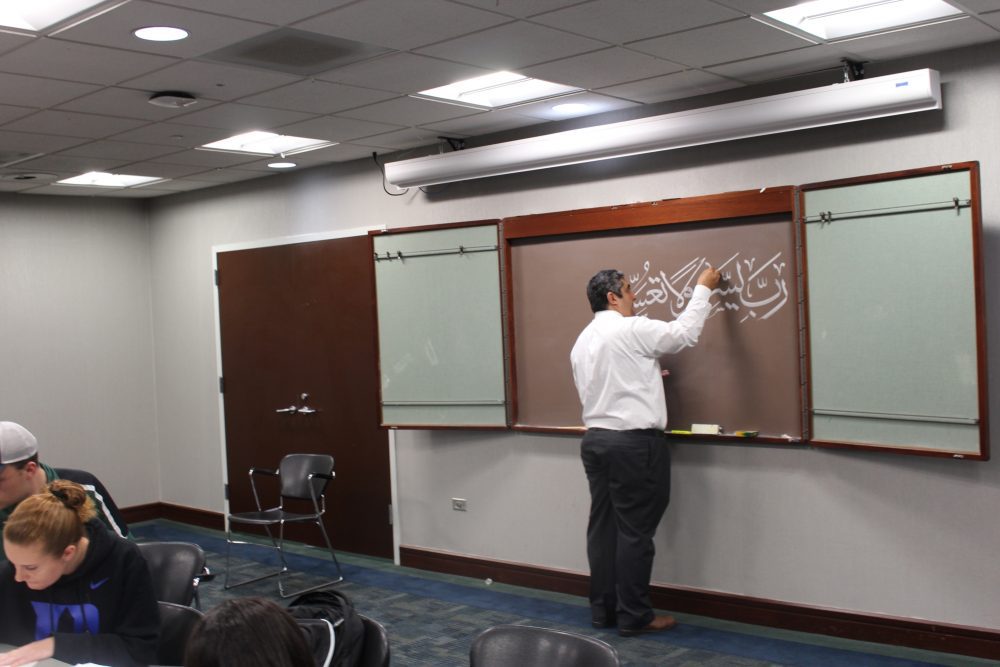
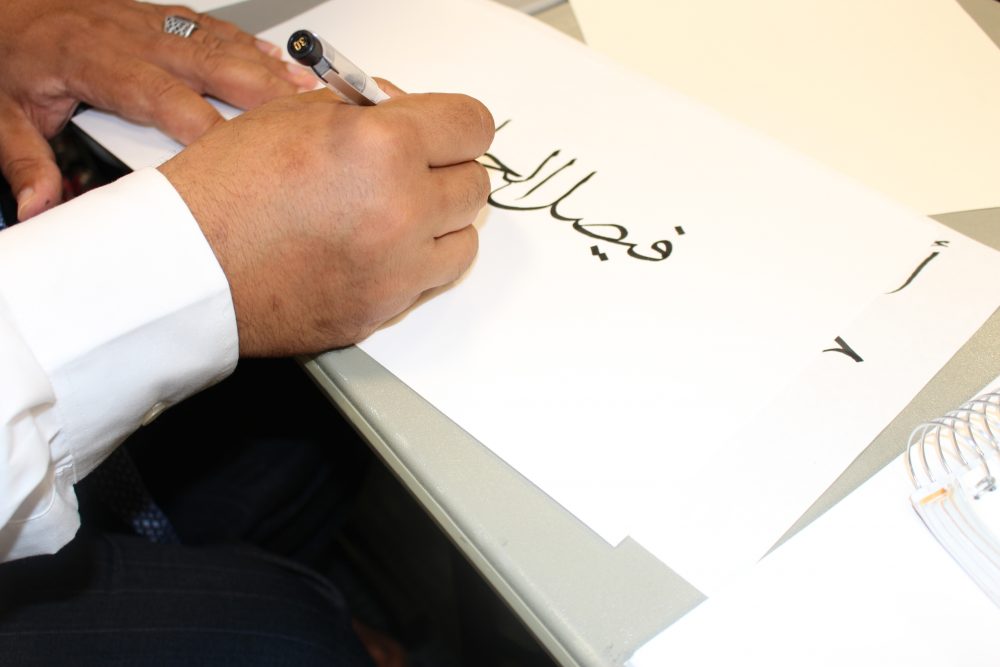
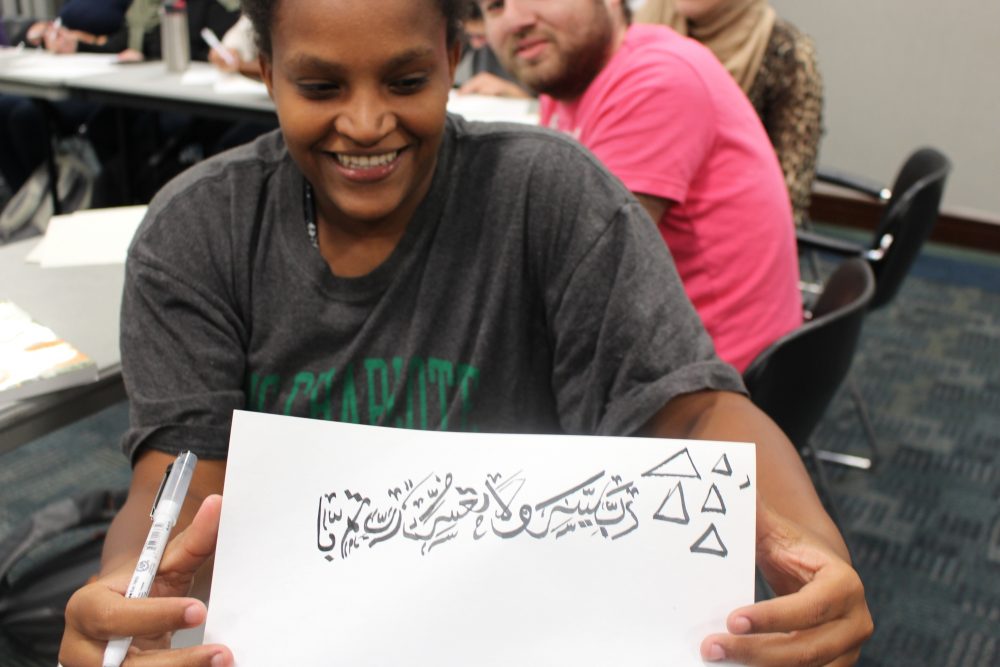
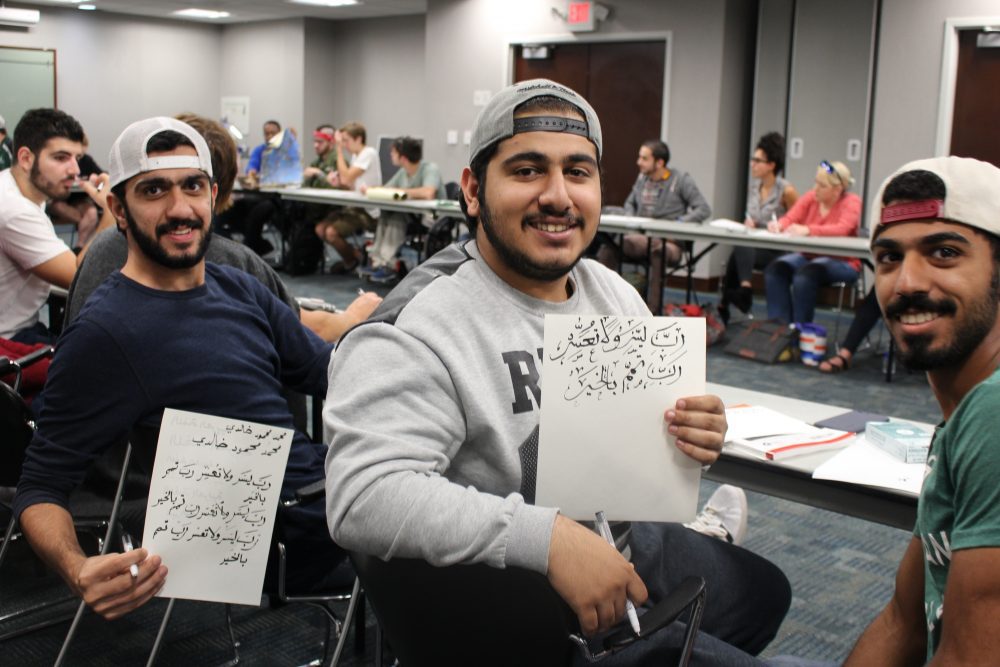
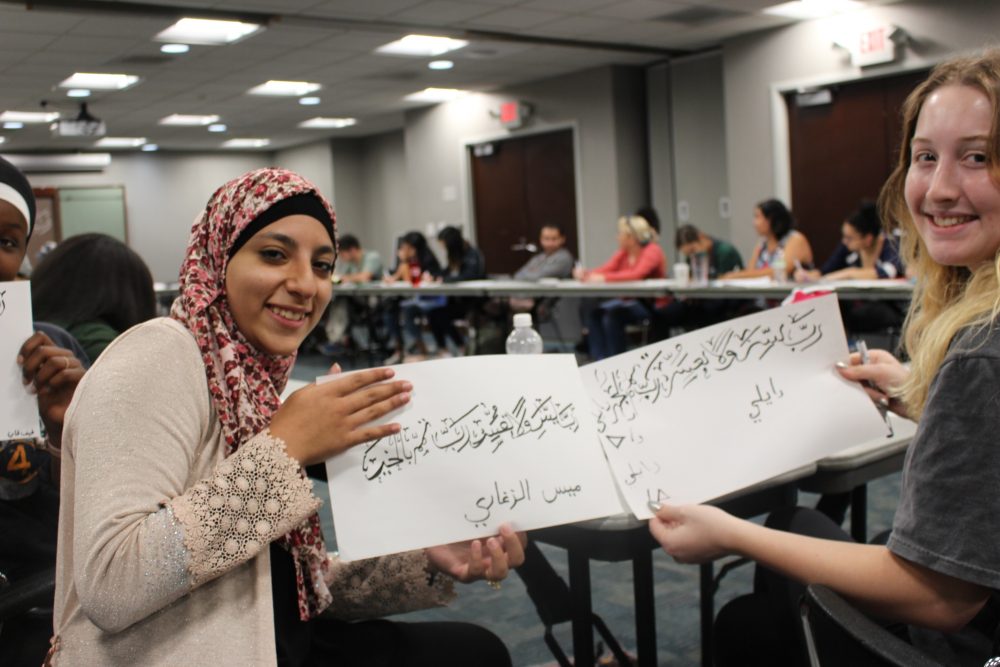
On October 6, Professor Muhammad Habib, an Assistant Teaching Professor at Georgetown University, led a workshop for more than 50 UNC Charlotte students and faculty. They explored the art of calligraphy as it appears in Arabic language and culture during a workshop. The workshop represented the first among other initiatives to promote Arabic language and culture throughout the UNC Charlotte community. More than 50 students, faculty, and staff attended the hands-on workshop during which Professor Habib explained the history and art of Arabic Calligraphy while also demonstrating his expertise. During the demonstration, he used chalk on a chalkboard to emphasize broad and narrow lines. In the latter segment of the workshop, participants practiced writing their names with calligraphy pens on paper. Students explained that the workshop presented a more artistic form of Arabic script not seen in everyday writing and they noted that the experience opened their thoughts about Arabic language and culture.
Arabic Representing at the Annual UNC Charlotte International Festival
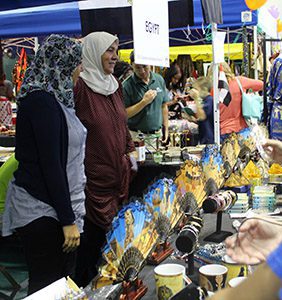
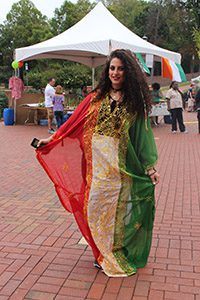
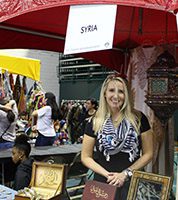
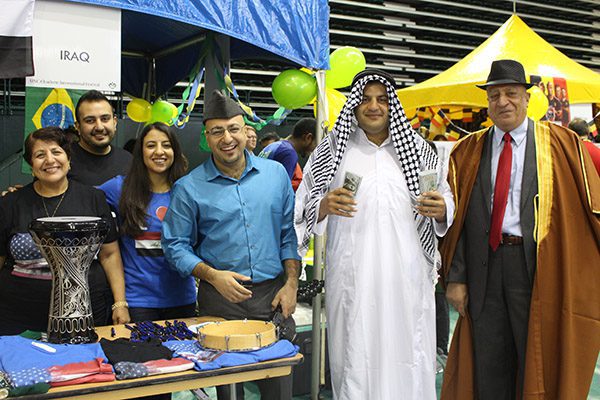
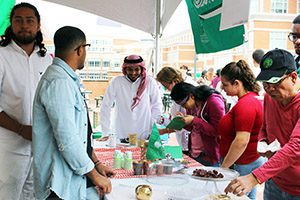
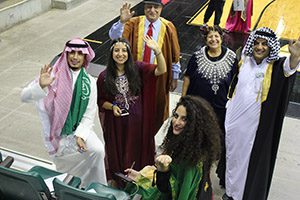
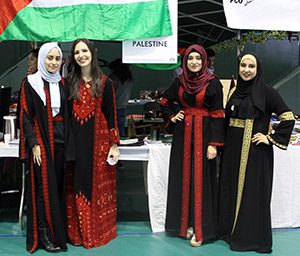
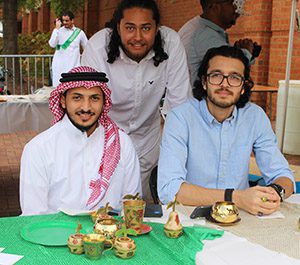
The annual UNC Charlotte International Festival is centered around booths arranged in colorful marketplace style representing the cultures of over 50 nations. The booths are staffed by UNC Charlotte international students and members of Charlotte’s international community and feature art, crafts and costumes from each participating country. Many booths offer international food for sale. Throughout the day the music and dance of a variety of nations are presented on indoor and outdoor stages. In addition, the International Festival, which is family-oriented, offers a number of elements such as mimes and face painting designed especially for children. The Arabic world is well represented with booths for Syria, Egypt, Iraq, Saudi Arabia and many other Arabic countries.
Arabic Film Club
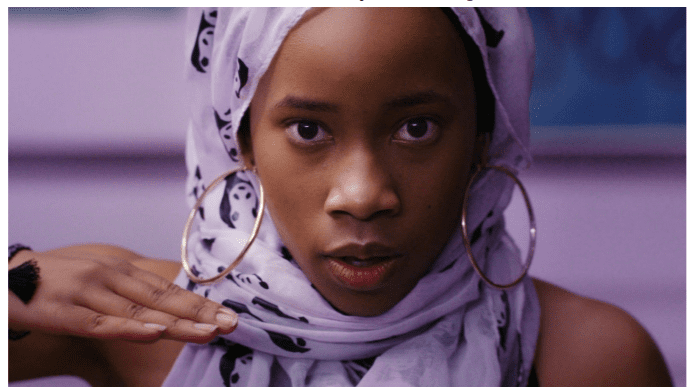
The Arabic Film Club meets once a week to watch films from various Arab countries. The club goals are to create a learning opportunity through entertainment, raise awareness of the different cultures in the Arab world, encourage students to develop a different perception of the Arab culture away from the stereotypes in mass media. Topics such as Arabness, Arab identity, citizenship, class, gender bias, and sense of belonging are discussed through the films presented. All the screened films are with English subtitles.

Arabic Conversation Club
The Arabic Conversation Club meets once a week to offer students an opportunity to polish their Arabic speaking skills around topics such as food, colors, traditions, and festivals. Both heritage speakers and Arabic learners meet to get engaged in conversations that would help both groups to achieve high levels of fluency. Students enjoy the advantage of learning Arabic in a friendly environment of small class size and individualized attention.
Arabic Calligraphy Club
The Arabic Calligraphy Club meets regularly to allow students to practice the art of calligraphy.

For a full list of Arabic Studies graduates, click here.
Featured Alumni
Sidra Marotti
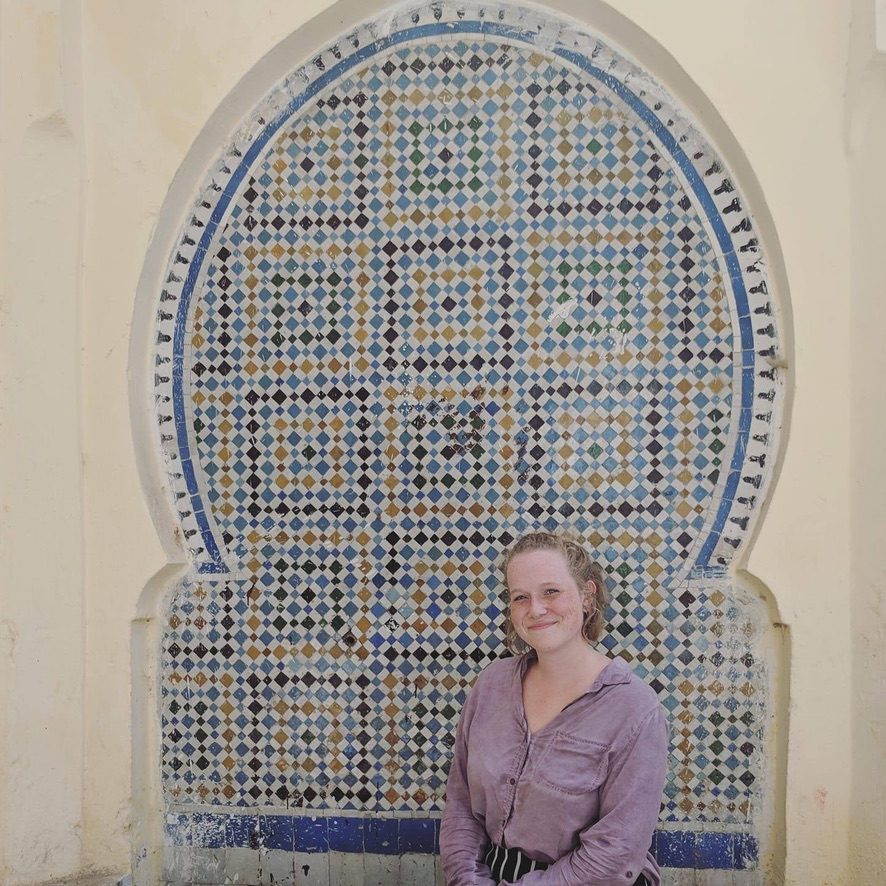
Sidrah Marotti graduated in May 2020 with a double Major in International Studies and Political Science as well as Minors in Arabic and Urban Studies Marotti is part of the Arabic program at UNC Charlotte and she was also the head of the Arabic Film Club. She has a passion for foreign cultures, especially the Arab world. She worked with the Fruitful Friends program through Refugee Support Services; this program pairs refugee families from all over the world with an American friend in order to help them acclimate to American culture. Marotti was paired with a Syrian family, which served as an excellent exchange of language and culture. She had the opportunity to practice her Arabic and experience Syrian cuisine and customs, while also providing support to a community that faces a large amount of discrimination here in North Carolina. Marotti completed an year-long exchange program through ISEP (International Student Exchange Program), where she continued her studies of political science and international studies, as well as Arabic language and culture at Al Akhawayn University in Ifrane, Morocco. After graduating in May 2020, Marotti began work as a Field Organizer for the Human Rights Campaign.
| Name | Job Title | |
|---|---|---|
| Noha Ghali | Teaching Professor, Coordinator & Advisor of Arabic Studies | nghali@charlotte.edu |
| Liliane Toss | Instructor of Arabic Studies & French | Liliane.Toss@charlotte.edu |
Success stories
Meet Olivia
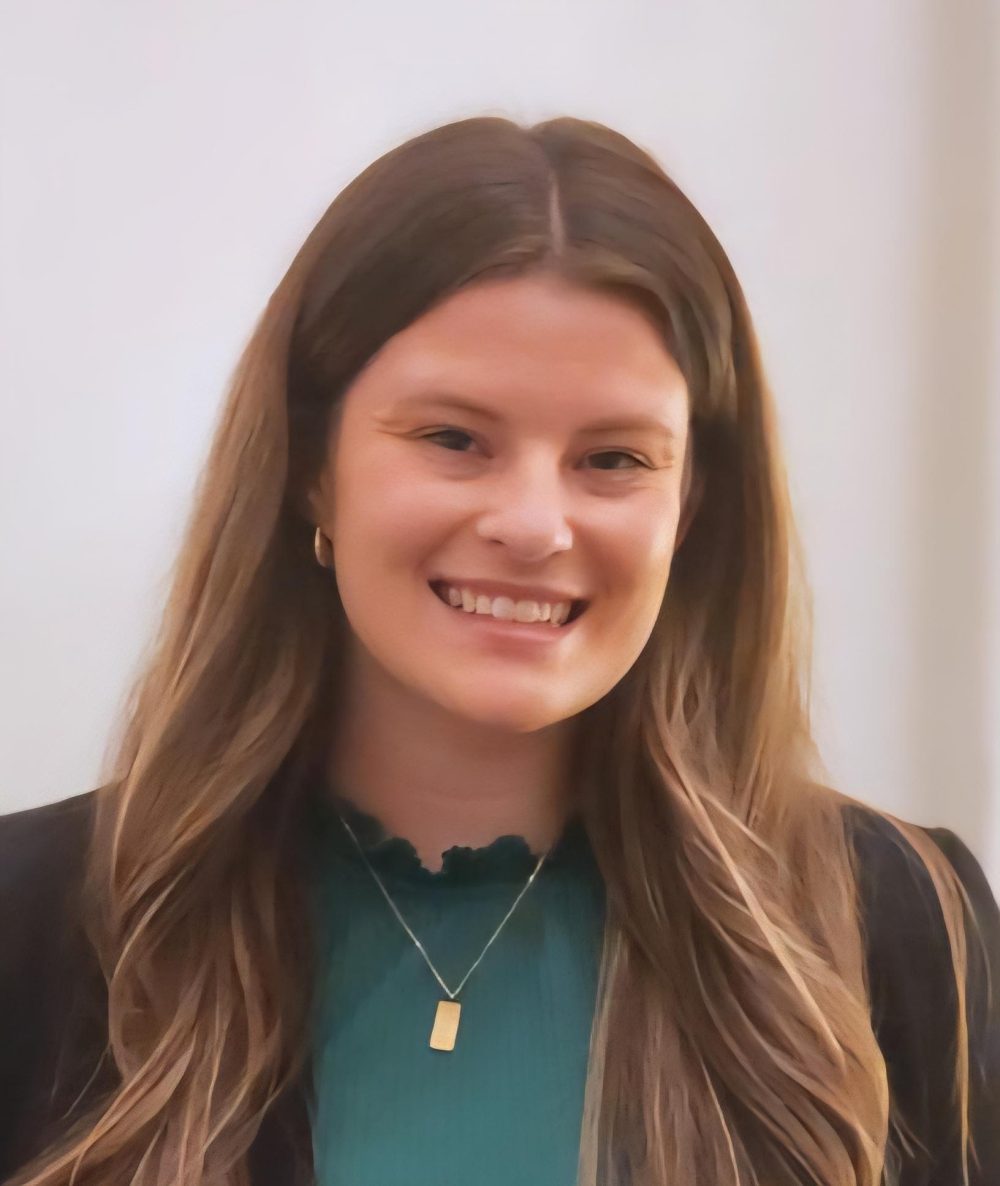
Olivia Stockwell graduated in May 2025 with a double major in International Studies and Religious Studies as well as a minor in Arabic Studies. In addition to taking Arabic courses at UNC Charlotte, Olivia studied abroad in Amman, Jordan in the summer of 2024 to take intensive MSA and Levantine Arabic courses at the Sijal Institute of Arabic Language and Culture. During this study abroad period, she conducted research for her, now published, Honors Thesis in Religious Studies that examined security, tourism, and sacrality at Bethany Beyond the Jordan, the site where it is believed that Jesus of Nazareth was baptized. After graduation, Olivia moved back to Amman, Jordan to take more Arabic courses and intern with the Renaissance Strategic Center at the Arab Renaissance for Democracy and Development where she worked on projects that brought public policy to local contexts in Jordan. Currently, Olivia is a master’s student in anthropology at Queen’s University Belfast where her research focuses on political resistance, tourism, and public policy in the Middle East and Eastern Europe.
Meet Ameer
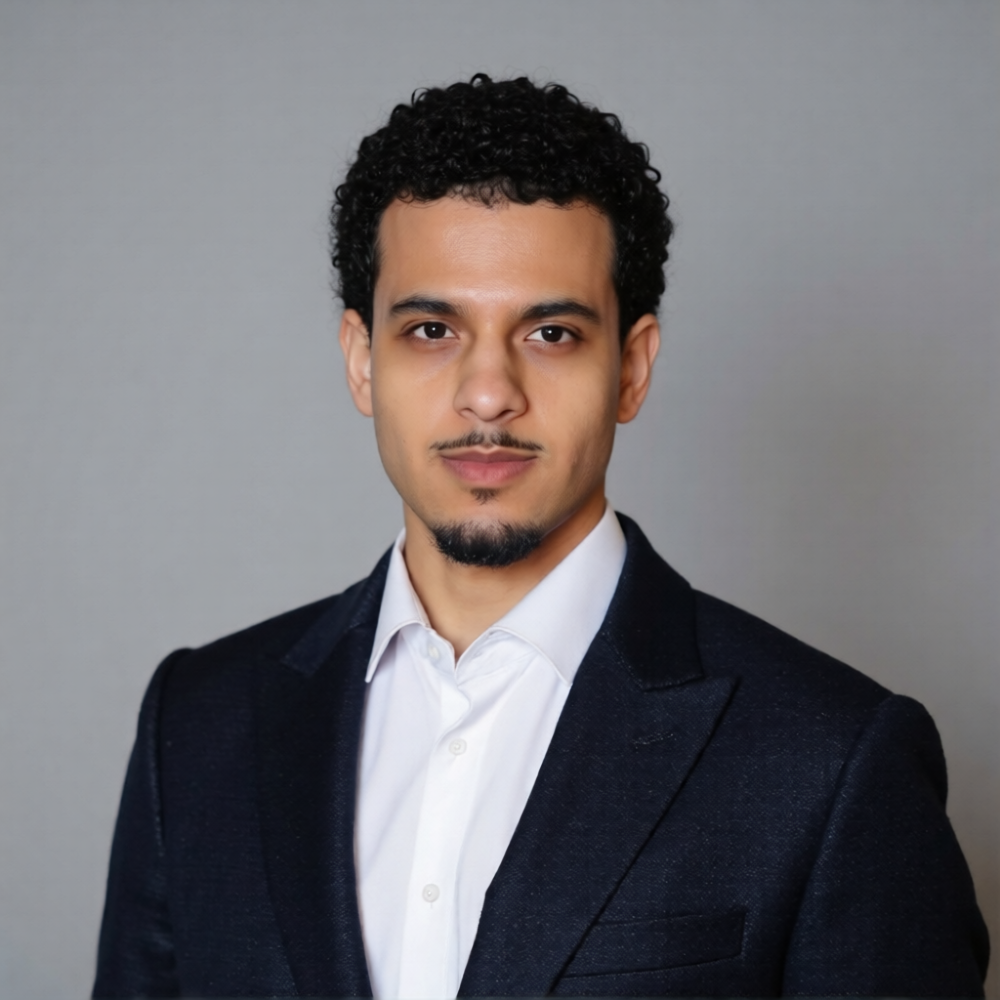
While raised speaking Moroccan Darija at home, pursuing an Arabic Studies minor provided Ameer Salameh with a rigorous foundation in Modern Standard Arabic (MSA), significantly enhancing his formal literacy and grammatical fluency. This dual capability allows him to seamlessly bridge colloquial dialects and formal registers—a skill essential to his work in healthcare access, where culturally resonant, clear communication helps build patient trust and reduces barriers to care.
Meet Alexandra
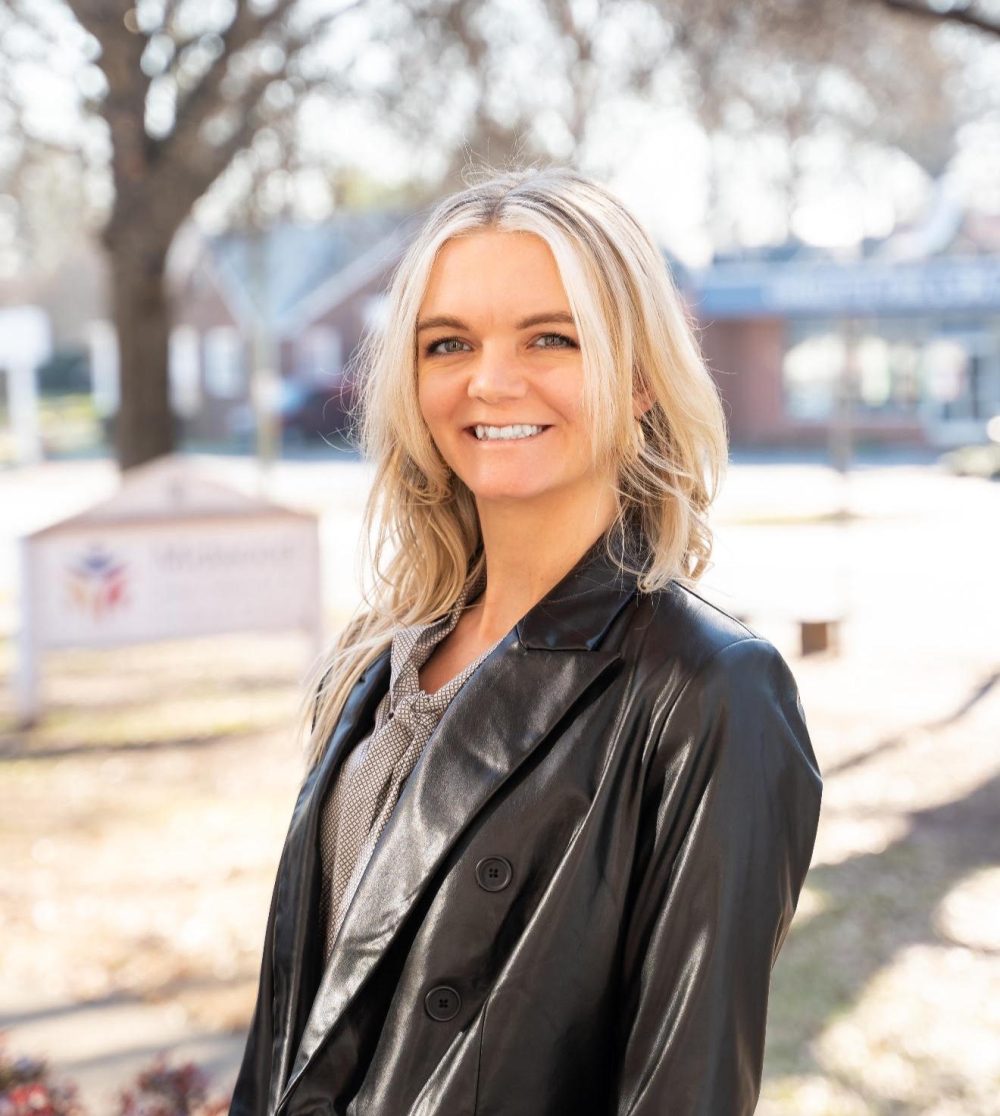
Alexandra Buckman graduated from UNC Charlotte with degrees in Political Science and International Studies, with a minor in Arabic Studies, a program that was newly introduced to the university during her college career. She studied Arabic language and culture in Morocco in 2020, an experience that deepened her understanding of the importance of cultural awareness, cross-cultural communication, and international engagement. Immersing in a different linguistic and cultural environment broadened her global perspective and strengthened her appreciation for the role that language access and cultural understanding play in building meaningful connections across borders.
Her academic background and international experience has directly informed her work as the Director of the Citizen Diplomacy Program at International House, where she supports the hosting of global delegations through the U.S. federal government, including exchanges through the Department of State and Congress. Alexandra’s studies in Arabic language and culture has equipped her with competence to cultural nuances, diverse perspectives, and the importance of fostering mutual understanding. These skills contribute to her ability to create welcoming and engaging experience for foreign dignitaries – in Arabic when that is the native language – while reinforcing her belief that person-to-person connections are essential to building lasting relationships and advancing global cooperation.
Explore Past Events and News about the Arabic Studies Program